Leather Grades Explained: Full-Grain, Top-Grain, Corrected and What Buyers Mean
Leather grade names are not standardised across markets. Full-grain in one buyer's specification means something different to a tannery in another country. Here is what the terms mean and what to clarify before sampling.
By Hufsa17 October 20265 min read
Leather grade names — full-grain, top-grain, corrected, split — describe which layer of the hide is used and how the surface has been processed. They are not universally standardised: the same term can mean different things to a European tannery, a US buyer and a South Asian manufacturer. Before you approve a sample or commit to a price, clarify what the buyer's specification actually means in physical terms.
The Hide Structure: What the Grades Reference
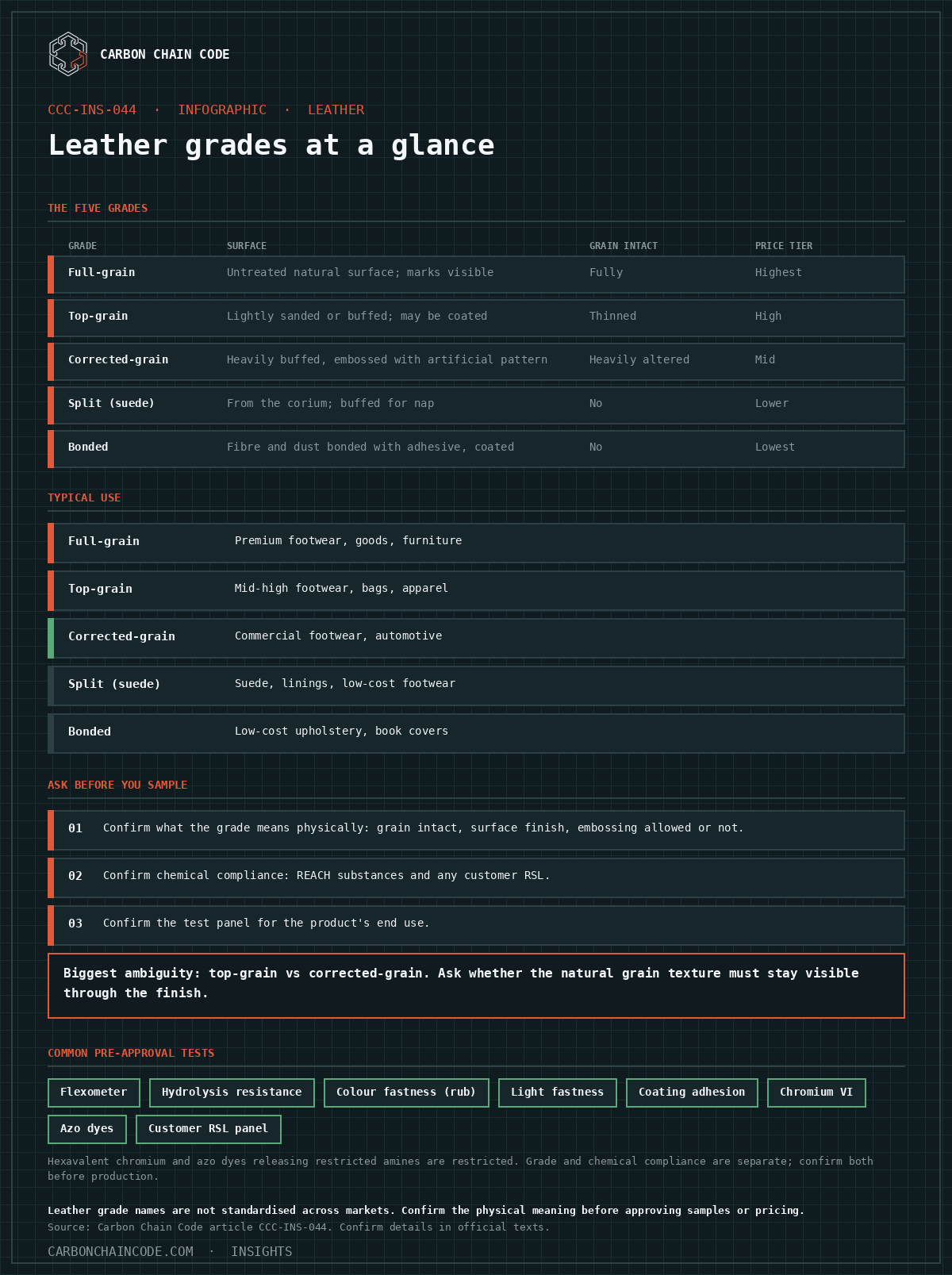
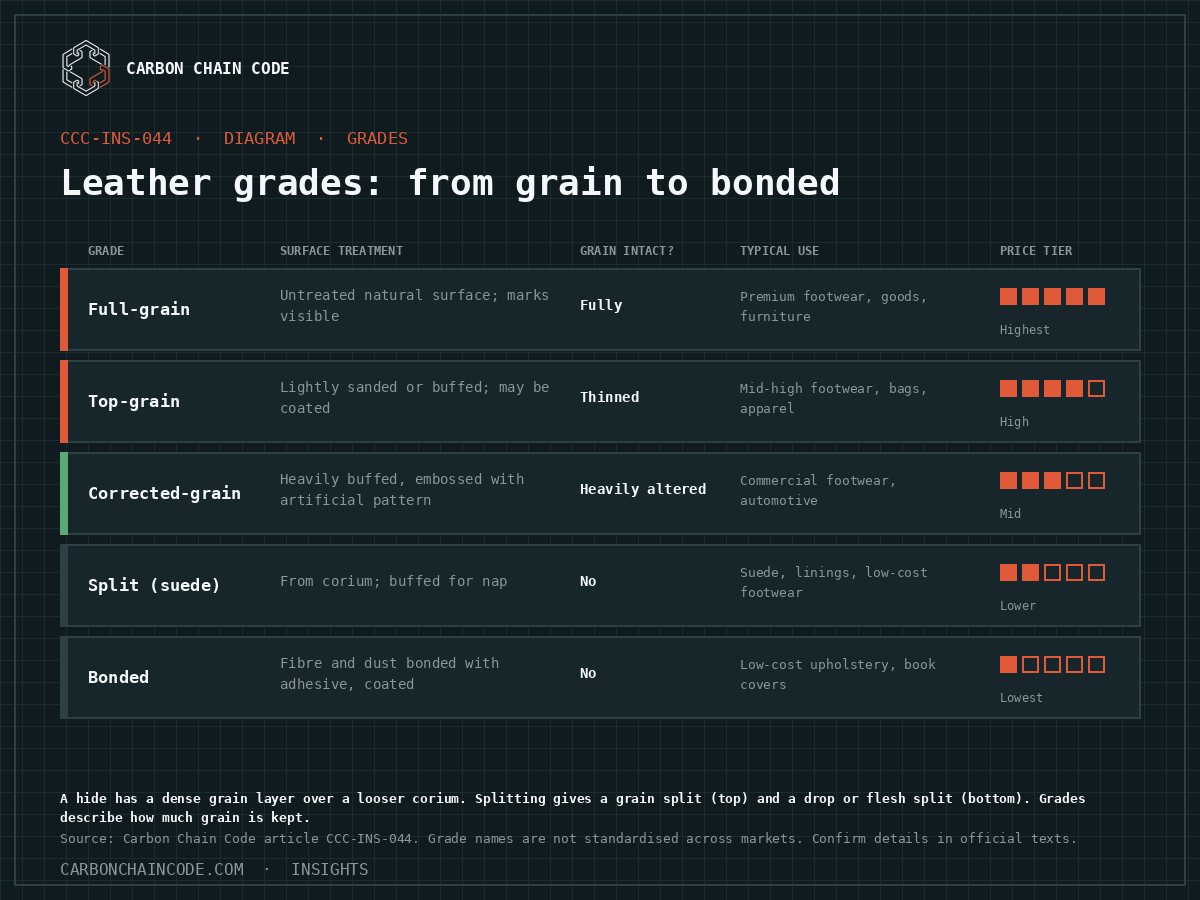
A cowhide has two main layers. The grain layer is the outer surface — it contains the tight, dense collagen fibre structure that gives leather its durability and its characteristic surface texture. Below the grain layer is the corium, a looser fibre structure. When a hide is split (mechanically separated into layers), the top layer is the grain split and the bottom layer is the drop split or flesh split. Grade names describe how much of the grain layer is retained and how much the surface has been altered.
Grade
Surface treatment
Grain layer intact?
Typical use
Price relative to full-grain
Full-grain
None — natural surface kept as it is; scars and marks visible
Yes, fully
Premium footwear, leather goods, furniture
Highest
Top-grain
Surface lightly sanded or buffed to remove surface blemishes; may be coated
Yes, but thinned
Mid-to-high footwear and bags, most apparel leather
High
Corrected-grain
Surface heavily buffed to remove defects; embossed with artificial grain pattern
Yes, but heavily altered
Commercial footwear, automotive
Mid
Split leather (suede)
From the corium layer; surface may be buffed to create nap
No
Suede products, linings, low-cost footwear
Lower
Bonded leather
Shredded leather fibre or dust bonded with adhesive and coated
No
Low-cost upholstery, book covers
Lowest
Where Buyer Specifications Are Often Ambiguous
Illustrative summary
The most common ambiguity is between top-grain and corrected-grain. A buyer who writes 'top-grain' in a brief may mean the surface has been lightly finished but the natural grain texture is visible, or they may mean any leather from the grain split that has been given a surface finish — which would include corrected. The practical question to ask is: does the specification require that the natural grain texture be visible through the finish, or is an embossed grain pattern acceptable? For premium products this distinction drives both price and sourcing market.
REACH, Restricted Substances and Leather
Leather is a processed material with a heavy chemical footprint from tanning and finishing. REACH regulations restrict specific substances in finished leather articles: chromium VI (hexavalent chromium) is restricted in leather articles that come into prolonged skin contact; azo dyes that can release specific aromatic amines are restricted; certain finishing chemicals may be restricted under customer RSLs even when not covered by regulation. Most large brands specify an RSL alongside their leather grade requirement — the grade and the chemical compliance requirement are two separate things that both need to be confirmed before production.
Frequently Asked Questions
Is vegetable-tanned leather automatically a more sustainable choice?
Not automatically. Vegetable tanning uses plant-derived tannins instead of chromium salts and produces a different leather character — firmer, develops a patina. But the environmental footprint depends on water and energy use in the tannery, the provenance of the hide, and the chemicals used in finishing, which may not be more benign. A full LCA is needed to compare, not just the tanning method.
How is 'genuine leather' defined?
The term 'genuine leather' has no single legal definition in most markets. In common use it refers to any product made from real animal hide, as opposed to synthetic leather. It is sometimes used in a misleading way to sell low-grade split or bonded leather. Some buyer specifications ban the term and require the grade to be specified explicitly.
What tests do brands typically require on leather before production approval?
Common tests include: flexometer (flex endurance), hydrolysis resistance, colour fastness to rubbing (dry and wet), light fastness, adhesion of surface coating, chromium VI content, azo dye testing and any customer-specific RSL panel. The exact test list depends on the end use — footwear upper, footwear lining, apparel and bag leather each have different durability requirements.
Need a CSRD gap analysis or hands-on implementation? Sustainability Frisk can help. www.sustainability-frisk.com
GRS certification does not guarantee a recycled content claim will hold. It certifies the chain of custody and sets a minimum content threshold. Here is what the standard requires and where factory audits focus.
A certificate and a batch-level record answer different questions. What GRS actually verifies, where its limits are, and what traceability adds, with the rules from the EU that push in that direction.
 Carbon Chain Code